Bold policies can’t move without public belief, alignment, and imagination. That’s what we build — narrative infrastructure that shifts perception and solidarity infrastructure that aligns movements.
If we build shared narrative infrastructure across Black, Indigenous, and transformative movements—through research, cultural production, collaborative campaigns, and aligned messaging—then we can help people see themselves in the fight for justice, believe bold change is possible, and act together to make it real.
That’s how we turn fragmented support into collective power — and solidarity into structural change.
Our approach recognizes the power of narrative and cultural strategies in shaping policies and fostering solidarity across historically oppressed groups. By fostering narrative alignment, we seek to build bridges and power to support social movements in inspiring individuals to actively engage in collective action.
As cohesive narrative infrastructures take root and liberatory social identities strengthen, we anticipate a shift in cultural norms and public discourse, paving the way for the widespread acceptance of transformative policies. By harnessing the collective power of diverse social movements, we will create a culture where justice, equity, liberation, and sovereignty are not only embraced but actively pursued.
BLIS is a Solidarity and Action Hub that builds solidarity across movements and society by braiding narratives, moving resources, and growing the cultural and strategic power needed to pass bold policy.
BLIS has opened my eyes to the possibility of cross-community solidarity through its research and convening practices. It’s powerful to understand through both data and lived experiences what keeps us from understanding each other but also what connects us across our different histories, struggles, and dreams. BLIS has inspired me to deepen my interest in creating platforms and social infrastructure to enable solidarity across our communities.
Being a member of BLIS has helped strengthen our work by expanding our scope and vision as to what economic justice and liberation can look like and how we achieve that bigger vision. While our work in the Guaranteed Income movement is rooted in our community in Jackson, Mississippi, being a part of the BLIS Collective allows us to learn how other communities envision the work of repair and transformation and recognize how our work fits in as one piece of a larger movement that is working toward a liberated future for all communities.
The relationships built through the collective have helped encourage us when the work is challenging and remind us that we are working on a long-term strategy together that is dependent on all of us – not just one of us. The trust built in the collective has led to honest challenges, conversations, and opportunities to learn from other movements that have helped us refine, reimagine, and strengthen our own work too. We are grateful to be a part of a movement that encourages shared strategy and vision but centers it in relationship, trust, and collective joy.
Being a member of BLIS has deepened my understanding that our movements are connected. As an Indigenous woman working to restore buffalo, land, culture, and foodways, I see solidarity building as a way of remembering that none of us are truly free until all of our communities have the opportunity to heal, govern ourselves, and determine our own futures.
BLIS has strengthened my relationships with people working across different movements and helped me recognize the shared struggles between Black liberation, Indigenous sovereignty, food justice, land rematriation, and cultural restoration. Through these connections, I have learned from the experiences of others while also sharing what we are building through the Texas Tribal Buffalo Project.
My work is rooted in bringing buffalo back, but it is also about bringing our people back to one another, to the land, and to the knowledge of our ancestors. BLIS has helped me see the importance of telling a different story—one that centers Indigenous women, community healing, traditional foodways, land-based education, and our right to create healthy and self-determined communities.
Being part of this collective has reminded me that narrative change happens through relationships and through the work we practice every day. When our youth spend time with buffalo, when families gather to harvest and share food, and when communities come together across movements, we are creating a new story about who we are—not as people defined by loss or disconnection, but as people carrying forward our traditions, restoring what was taken, and building a future rooted in dignity, reciprocity, and collective liberation.
BLIS has given us an exciting new container to strategize and build in. Solidarity across movements is something we’ve always believed in but hadn’t always had a place to come together around without the public eye. In Solidarity Gym sessions and conversations with other members through the inaugural in-person convening, we could really talk openly about the work of cross-solidarity building from narrative to policy. This helped craft the movement stories we featured at our biannual conference, Guaranteed Income Now. BLIS’s work is the long-arc of change, but to take on the forces that aim to sow distrust, we need this collaborative solidarity space to truly build the plans of the future.
Being a part of the BLIS Collective has introduced me to so many more like-hearted people and organizations working on Black and Native liberation and made collaboration easy. In the spaces BLIS curates, we have the opportunity to let down our walls and titles in favor of true solidarity. Not solidarity as a talking point or piece of content, but solidarity that looks like shared meals, full-body laughs, and a sincere care for what happens to one another and the people we love. The world I want to live in is also the world that BLIS makes possible each day.
Serving on the BLIS Radical Collaboration Fund’s Grantmaking Council was a refreshing and deeply affirming experience. It offered a rare opportunity to participate in a grantmaking process grounded not simply in traditional philanthropic models, but in the values of Black liberation, Indigenous sovereignty, trust, collaboration, and community. I especially appreciated being part of a collective process where diverse perspectives were welcomed, thoughtful dialogue encouraged, and decisions approached with care and respect. Rather than feeling transactional or overly bureaucratic, the process invited us to think expansively about what meaningful support for transformative work can look like.
As a member of this first-ever Council, I was proud to help shape an innovative model that centers those closest to the work and recognizes the power of radical collaboration. Thank you, BLIS, for helping to reimagine philanthropy as a vehicle not merely for funding change, but for building relationships, strengthening movements, and advancing liberation.
What we’ve accomplished and how we measure it.
We measure our impact across four areas: movement, cultural, philanthropic, and policy. A story without organizing is just marketing. A policy win without culture change behind it gets rolled back. Transformation requires all four.
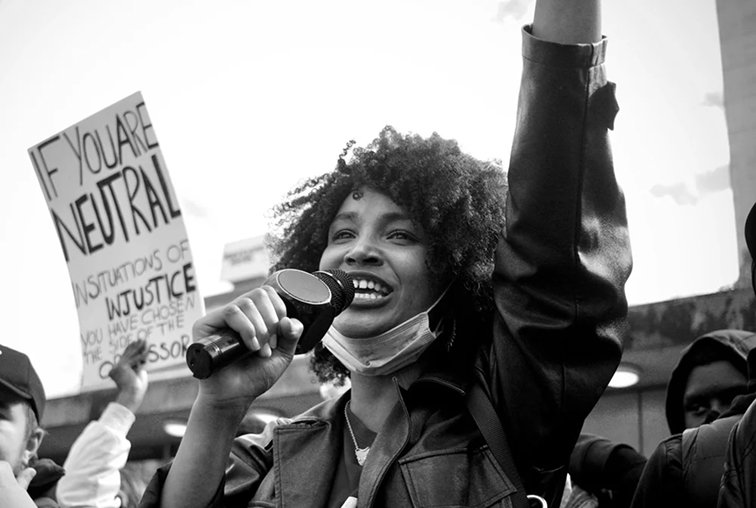
Are our members and the broader movements they work within building deeper solidarity and aligning on shared narratives?
Are transformative policies advancing, and are material conditions changing for Black, Indigenous, and working-class people?
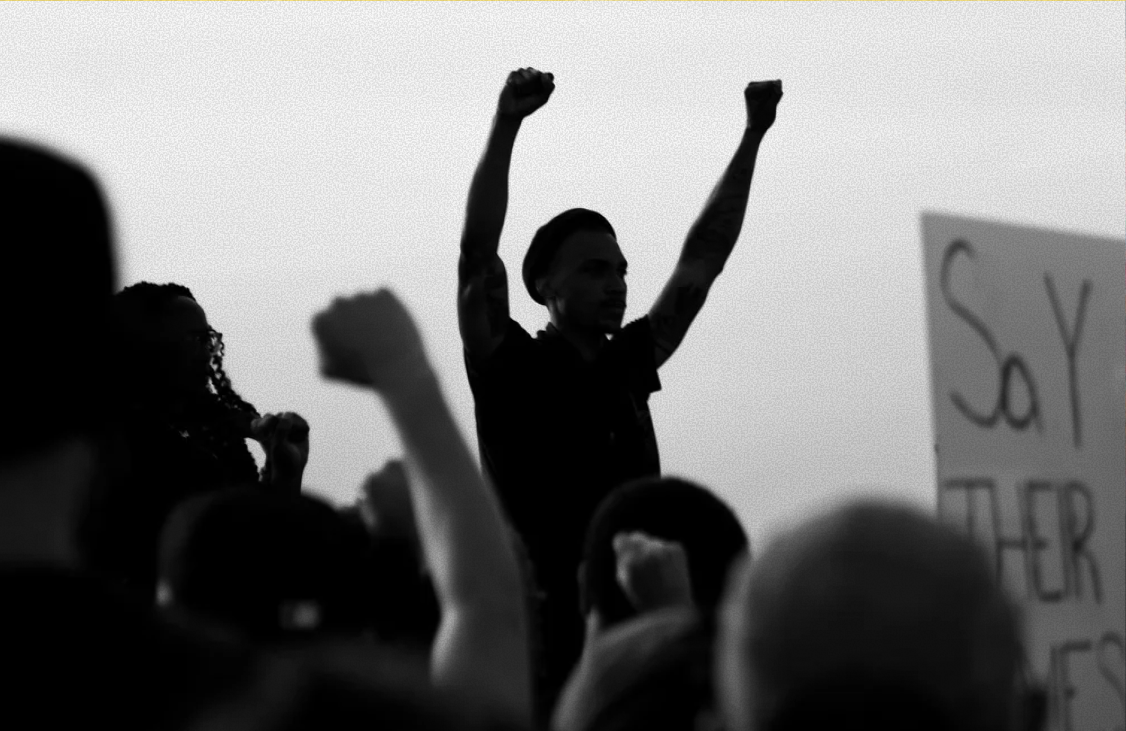
Are our narratives traveling and entering cultural conversations, shifting what people believe is possible, and closing the hope gap?
Is philanthropy moving capital for intentional collaboration, and are funders adopting our Radical Collaboration Fund model?
Our grounding papers detail the philosophical and strategic function of the BLIS Collective, outlining our inside and outside power-building strategy and how we operationalize it.
We use precise language as much as we can. Some of these terms we’ve developed ourselves; others come from the scholars, organizers, and thinkers whose work we build on. Here’s what we mean when we use them.
An assemblage of encounters pushing the system towards new states, activism is one of the causes bringing about evolution and re-creation within the system. (Marcelo Svirsky)
“If you think we’re going to try to define art, you’re crazier than we are.” (The Culture Group)
Publicly funded trust accounts for newborns in low-wealth families, designed to close the racial wealth gap.
The process of returning to ourselves. The embodied processes as freedom. (Leanne Betasamosake Simpson)
If we understand base-building as a sustained political-organizational engagement with a specific community/demographic/sector of the working class over certain issues (Punto Rojo) then we should understand “choir-building” as a sustained engagement with the activists, groups, and organizations whose primary labor is focused on a set of social issues to align, organize, and activate around a more concrete and shared vision. (BLIS Collective)
An action taken by a group, either directly or on its behalf, through an organization in pursuit of its members’ perceived shared interests. (J. Angelo Corlett)
Identification with, or sense of belonging to, a particular group based on various cultural categories, including nationality, ethnicity, race, gender, and religion. Cultural identity is constructed and maintained through the process of sharing collective knowledge such as traditions, heritage, language, aesthetics, norms, and customs. (Vivian Hsueh-Hua Chen)
The shared set of implicit and explicit values, norms, ideas, concepts, and rules of behavior that allow a social group to construct its reality. A society’s “way of life.” (BLIS Collective)
“A long-term process involving the bureaucratic, cultural, linguistic, and psychological divesting from colonial power.” (Linda Tuhiwai Smith) “Decolonization in a settler context is fraught because empire, settlement, and internal colony have no spatial separation. Each of these features of settler colonialism in the US context – empire, settlement, and internal colony - make it a site of contradictory decolonial desires.” (Eve Tuck, K.Wayne Yang)
Select aspects of a story that are communicated in a specific way to promote a particular problem, solution, or moral evaluation. (Robert Entman)
Direct, recurring cash that gives people the stability and freedom to live with dignity.
The way in which a dominant group or institution maintains and reinforces its power by shaping beliefs, values, and norms within a society. (Nicki Lisa Cole)
The Indigenous-led movement to reclaim, retain, and strengthen sovereignty and stewardship of ancestral lands, practices, and lifeways.
A social identity that can activate or rally individuals within a group to collective action that is grounded in the values of liberation, collectivism, freedom, and justice. This identity is rooted in the belief that true freedom is collective, and liberation is a shared journey. (BLIS Collective)
A social identity that can activate or rally individuals within a group to collective action. It can be used for justice or oppression, depending on the values driving the collective action. ( i.e. MAGA) (BLIS Collective)
Sustained groupings that develop a frame or narrative based on shared values, that maintain a link with a real and broad base in the community, and build for a long-term transformation in power (Manuel Pastor, Rhonda Ortiz)
A collection of stories that circulate within a society that convey themes, frames, and worldviews that are collectively understood and embraced by its members. These narratives often uphold and reinforce cultural norms, values, and beliefs. Narratives serve as powerful tools for communication, conveying meaning, identity, and cultural norms within societies. They influence perceptions, beliefs, and behaviors and both reflect and shape our collective consciousness. (BLIS Collective)
When narratives situated across different topic areas move closer to a state of agreement, harmony, and/or congruence. It involves various components of narratives becoming more coherent and mutually reinforcing. Effective narrative alignment enhances the clarity, impact, and engagement of a story, enabling it to resonate across different audiences. (BLIS Collective)
An intentional effort to form and interlace narratives and relationships within different target audiences. (BLIS Collective)
An intentional effort to shift the stories that guide our values and shape how people make meaning of information and experiences. (BLIS Collective)
The daily collection of narratives that individuals or groups within a specific culture interact with. (BLIS Collective)
The fundamental and interconnected systems, services, and platforms that enable stories, perceptions, and understandings to be constructed, shared, and evolved. (BLIS Collective)
The ability to influence perceptions, understandings, mindsets, and ideologies within a society. It involves the capacity and ability to challenge or maintain existing narratives, shape cultural norms, and promote alternative perspectives. Narrative power can be held at the individual and collective level – and can be wielded to challenge dominant paradigms, advocate for social change, and foster greater understanding and solidarity across communities. (BLIS Collective)
An orientation and set of activities focused on deep and reciprocal cooperation and partnership, specifically designed to challenge the competitive dynamics that capitalism facilitates. (BLIS Collective)
Both a sustained practice of deep empathy and shared action, and an outcome that fosters deeper connections between struggles. “Solidarity is an uneasy, reserved, and unsettled matter that neither reconciles present grievances nor forecloses future conflict.” (Eve Tuck, K. Wayne Yang)
A process of repairing, healing, and restoring a people injured because of their group identity and in violation of their fundamental human rights by governments, corporations, institutions, and families. (National Coalition of Blacks for Reparations in America)
A shift in society’s attitudes, policies, and laws with regard to particular values (equality, justice, liberation) and issues (immigration, gun violence, climate change, etc.) (BLIS Collective)
The immediate physical surroundings, social relationships, and cultural milieus within which defined groups of people function and interact. (Elizabeth Barnett, Michele Casper)
A person’s knowledge that they belong to a social category or group (Michael Hogg and Dominic Abrams)
An analytic framework for studying the origins of collective actions and how collective actions occur. Value-added theory claims that if a social system is structurally conducive to collective action, and a group of people recognizes structural strain , a generalized belief emerges within said group, and a selection of participants can be mobilized to act, and the social control forces are unable to counter the prior determinants – then a collective action will occur. (Neil J. Smelser)